The Strategic Integration of Digital Marketing and Web Design
Did you know that nearly 50% of consumers form their initial impression of a business based solely on its website design? This powerful statistic reveals a fundamental truth in today’s digital world. Your online presence is your storefront, your salesperson, and often the first handshake with a potential customer.
Many businesses view web design and digital marketing as separate efforts. However, we believe that truly effective online success stems from a seamless, integrated approach. When your website and your marketing strategies are built to work together, they create a powerful ecosystem.

This synergy ensures your brand message is consistent, your user experience is flawless, and your marketing efforts yield maximum results. A cohesive strategy, combining effective digital marketing and web design, can truly transform your business.
In this comprehensive guide, we will explore this critical relationship. We’ll uncover why integrating these two disciplines is not just beneficial, but essential for modern business growth. From understanding how design impacts your search engine rankings and conversion rates, to exploring the latest trends shaping the future of your online presence, we will provide actionable insights to help you build a strong digital foundation.
At its core, a strong digital presence is about more than just having a website or running a few ads. It’s about creating a unified, strategic approach where every element of your online presence works in harmony. This is where the strategic integration of web design and digital marketing becomes indispensable. Web design provides the foundation – the visual appeal, functionality, and user experience – while digital marketing drives traffic and engagement to that foundation. Without one, the other struggles to reach its full potential.
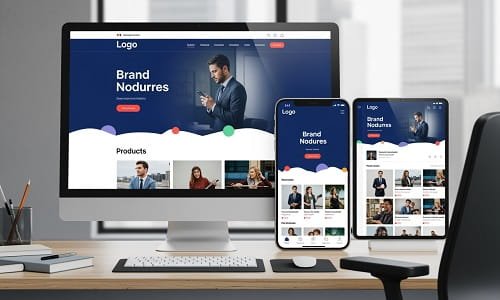
A holistic approach to your digital strategy treats your website not as a standalone brochure, but as an integral part of a larger ecosystem. This ecosystem includes everything from the site’s structure and content to its branding, accessibility, and overall performance. When we align every element—navigation, visual hierarchy, copy, and interactive features—with strategic goals like lead generation or brand awareness, the website transforms into a powerful marketing engine. This ensures that your brand identity is consistently reflected across all digital touchpoints, fostering trust and recognition among your audience. People tend to judge a brand by its website’s appearance, making consistent and well-designed web presence crucial for online branding and building a strong brand identity.
Core Components of Digital Marketing and Web Design Synergy
The synergy between web design and digital marketing is evident in several key areas:
- Information Architecture (IA): A well-planned IA ensures that your website’s content is organized logically, making it easy for users to find what they need. This ease of navigation directly impacts user experience and, consequently, how long visitors stay on your site and whether they convert.
- Visual Storytelling: Design elements like imagery, typography, and color palettes are not just aesthetic choices; they are powerful tools for communicating your brand’s story and values. A compelling visual narrative keeps users engaged and reinforces your marketing messages.
- User Journey & Conversion Funnels: Effective web design meticulously maps out the user journey, guiding visitors through a clear path toward conversion goals. This involves strategically placed calls-to-action (CTAs), intuitive forms, and streamlined checkout processes.
- Brand Trust: A professional, secure, and well-maintained website signals credibility. Conversely, an outdated or poorly functioning site can quickly erode trust, regardless of how strong your marketing campaigns are.
- Content Presentation: Digital marketing relies heavily on compelling content. Web design dictates how this content is presented—its readability, visual hierarchy, and overall impact. A beautiful design can make even complex information digestible and engaging.
By integrating these components from the outset, businesses can ensure that their website is not just an online presence, but a strategic asset that actively contributes to their marketing objectives and overall business growth.
Technical Foundations for Search Engine Success
A beautifully designed website is only effective if people can find it. This is where the technical foundations of web design intersect directly with digital marketing’s most crucial component: Search Engine Optimization (SEO). Integrating SEO into your web design process from the start is paramount for achieving high search engine rankings and attracting organic traffic.
Search engines like Google rely on various factors to rank websites, many of which are directly influenced by web design. For instance, using semantic HTML helps search engines understand the structure and meaning of your content, leading to better indexing. Site speed, a critical user experience factor, also plays a significant role in SEO. Websites that load slowly frustrate users and are penalized by search engines. To optimize for speed, we focus on minifying code, compressing images, and leveraging efficient hosting solutions.
Google’s Core Web Vitals are an essential set of metrics that measure a page’s usability in the real world. These include:
- Largest Contentful Paint (LCP): Measures loading performance. An LCP score of 2.5 seconds or less is considered ‘good’.
- Interaction to Next Paint (INP): Measures responsiveness to user interactions.
- Cumulative Layout Shift (CLS): Measures visual stability. A CLS score between 0 and 0.1 is considered ‘good’.
Optimizing for these metrics directly improves both user experience and search engine rankings, ensuring that your website is not only discoverable but also enjoyable to use. Agencies specializing in digital marketing, such as North AL Social digital marketing, often emphasize these technical aspects as a cornerstone of their strategy, recognizing their profound impact on overall online visibility.
Optimizing for Mobile Responsiveness and Performance
In an increasingly mobile-first world, responsive design is no longer optional—it’s a necessity. With more than 50% of internet traffic coming from mobile devices, and a staggering 92% of all online activities happening on mobile, your website must provide an optimal viewing experience across all screen sizes. A non-responsive site alienates a vast portion of your audience and significantly harms your search rankings.
Mobile-first design prioritizes the mobile experience, ensuring that your content and functionality are perfectly adapted for smaller screens before scaling up to desktops. This approach improves user retention, as visitors are less likely to abandon a site that is easy to navigate on their device. Beyond responsiveness, mobile performance is key. Fast loading times on mobile, often measured by LCP, are critical for keeping users engaged and reducing bounce rates. By focusing on these technical foundations, we ensure that your digital presence is robust, discoverable, and accessible to everyone, everywhere.
Maximizing Conversions Through User-Centric Elements
The ultimate goal of both web design and digital marketing is to drive action—whether that’s a purchase, a sign-up, or a contact request. This is where user-centric design elements become paramount in maximizing conversion rates and enhancing user engagement. A well-designed website guides visitors intuitively, transforming casual browsers into loyal customers.
One of the most critical elements is navigation logic. Poor navigation causes 61.5% of visitors to abandon a website, highlighting the direct link between user experience and bounce rates. Clear, intuitive navigation allows users to effortlessly find the information they need, keeping them on your site longer and increasing their likelihood of conversion.
Clear calls-to-action (CTAs) are another cornerstone of conversion-focused design. Integrating compelling CTAs, strategically placed and using persuasive language (like ‘free,’ ‘offer expires soon,’ or ‘download now,’ which can boost conversion by 5%), directs traffic to optimized landing pages. These pages are specifically designed to convert visitors into customers, ensuring that marketing efforts translate into tangible results.
We also leverage A/B testing to continuously refine web elements. By testing different layouts, button colors, headlines, and CTAs, we can identify what resonates most effectively with your audience, leading to data-driven improvements in conversion rates. Many professional services, including those offered by a dedicated Web design and development agency, focus heavily on these iterative design processes to ensure optimal performance. Interactive elements, such as quizzes, calculators, or product configurators, further engage users, making their experience more dynamic and memorable, which in turn boosts engagement and conversions.
The Role of Accessibility in Digital Marketing and Web Design
Beyond aesthetics and conversions, modern web design must embrace accessibility. Designing for accessibility means ensuring that your website is usable by everyone, including individuals with disabilities. This isn’t just about compliance with standards like WCAG (Web Content Accessibility Guidelines); it’s about broadening your marketing reach and fostering inclusivity.
Implementing features like high-contrast text, keyboard navigation, clear alt-text for images, and screen reader optimization ensures that your content is available to a wider audience. This commitment to inclusive design not only expands your potential customer base but also enhances your brand’s reputation as a responsible and user-friendly entity. In many regions, accessibility is also a legal requirement, making it a critical consideration for both marketing reach and compliance.
Emerging Innovations for a Future-Proof Presence
The digital landscape is constantly evolving, and staying ahead of the curve means embracing emerging web design trends that can significantly impact your marketing efforts. For 2026 and beyond, several innovations are set to redefine how businesses engage with their online audience.
One of the most significant shifts is the evolution of SEO into Generative Engine Optimization (GEO). As AI-powered search engines and chatbots become more prevalent, the focus will move from simply ranking high in traditional search results to being cited and recommended by AI assistants. This means optimizing content and site structure to be easily understood and referenced by AI, ensuring your business is the authoritative answer to user queries.
Sustainability in web design, often referred to as “Green IT,” is another burgeoning trend. This involves creating ultra-light, energy-efficient websites that load quickly, consume less power, and contribute to a smaller carbon footprint. Beyond the environmental benefits, sustainable web design often correlates with better performance metrics, which in turn can positively impact SEO and user experience. Websites with green IT principles often load in less than one second.
3D immersive experiences are also becoming more accessible and impactful. Thanks to advancements like WebGPU, businesses can offer lightweight, high-quality 3D product visualizations, augmented reality (AR) try-ons, and interactive virtual tours directly within a web browser, without requiring app downloads. This level of immersion can significantly boost engagement and reduce returns for e-commerce businesses.
Finally, the increasing popularity of dark mode isn’t just a stylistic choice; it offers tangible benefits. Dark mode economizes up to 30% of energy on OLED screens, appealing to environmentally conscious users and those seeking to reduce eye strain. Incorporating these emerging trends allows businesses to future-proof their digital presence, ensuring they remain competitive and relevant in an ever-changing online world.
Frequently Asked Questions about Digital Presence
What is the primary difference between web design and digital marketing?
While closely intertwined, web design and digital marketing serve distinct primary functions. Web design focuses on creating the visual aesthetics, layout, structure, and user experience (UX) of a website. It encompasses elements like graphic design, user interface (UI), responsive layouts, and information architecture, aiming to build a functional, appealing, and user-friendly platform.
Digital marketing, on the other hand, encompasses all efforts to promote products, services, or brands using electronic devices or the internet. This includes strategies like SEO, content marketing, social media marketing, email marketing, pay-per-click (PPC) advertising, and affiliate marketing. Its objective is to drive traffic, generate leads, and convert customers through various online channels.
Web design builds the house, making it attractive and functional, while digital marketing brings people to the house and encourages them to stay and engage. Both are critical, but their roles differ in scope and execution.
How does website navigation impact marketing campaign performance?
Website navigation profoundly impacts marketing campaign performance by directly influencing user experience and conversion rates. When users arrive at your site from a marketing campaign (e.g., a social media ad or an email link), clear and intuitive navigation is crucial for guiding them to their desired information or the intended conversion point.
Poor navigation can lead to high bounce rates (as noted, 61.5% of visitors abandon a site due to it), meaning your marketing efforts are wasted if users can’t easily find what they’re looking for. Conversely, well-structured navigation, logical pathways, and strategically placed calls-to-action ensure that visitors can move seamlessly through your site, increasing engagement, reducing frustration, and ultimately boosting the effectiveness of your marketing campaigns. It directly supports the user journey designed by marketers.
Why is mobile responsiveness critical for modern business growth?
Mobile responsiveness is absolutely critical for modern business growth for several compelling reasons. Firstly, the vast majority of online activity now occurs on mobile devices—over 50% of internet traffic and 92% of all online activities. If your website isn’t optimized for mobile, you’re effectively alienating a massive segment of your potential audience.
Secondly, search engines heavily prioritize mobile-friendly websites in their rankings. Google, for instance, uses mobile-first indexing, meaning it primarily uses the mobile version of your content for indexing and ranking. A non-responsive site will suffer in search visibility, making it harder for potential customers to find you.
Finally, mobile responsiveness directly impacts user experience and conversions. A site that’s difficult to use on a phone—requiring pinching, zooming, or awkward scrolling—will quickly lead to frustration and abandonment. A seamless mobile experience, however, keeps users engaged, improves brand perception, and increases the likelihood of them completing a desired action, directly contributing to business growth.
Conclusion
In today’s hyper-connected world, a robust digital presence is no longer a luxury but a fundamental requirement for business success. As we’ve explored, the distinction between web design and digital marketing is blurring, giving way to a more integrated, holistic approach. By strategically aligning your website’s aesthetics and functionality with your overarching marketing goals, you can create a powerful, cohesive online ecosystem.
This journey involves building strong technical foundations for SEO, crafting user-centric designs that maximize conversions, and embracing emerging innovations to future-proof your presence. From optimizing for Core Web Vitals and mobile responsiveness to leveraging GEO and immersive 3D experiences, every design and marketing decision should be data-driven and focused on delivering a seamless, engaging experience for your audience.
A well-integrated digital strategy ensures brand consistency, enhances user engagement, and drives measurable business growth. It’s about treating your website as your most powerful marketing asset, continuously optimizing it to meet the evolving demands of the digital landscape. By investing in this synergistic approach, businesses can unlock their full online potential, gain a significant competitive advantage, and build lasting relationships with their customers.