Digital marketing has moved far beyond being a support function for businesses. By 2026, it stands as a core growth engine for brands of every size from local startups to global corporations. The way people discover products, consume content, and make purchase decisions is now deeply shaped by digital platforms. Search engines, social media, video, influencers, AI-driven personalization, and data analytics together define the modern marketing landscape. However, rapid growth also brings complexity, saturation, and regulatory pressure.
This SWOT analysis offers a complete and professional evaluation of digital marketing as it stands in 2026.
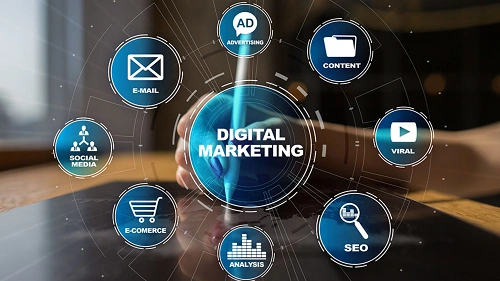
Strengths
Global reach with precise targeting
One of digital marketing’s greatest strengths is its ability to reach global audiences while targeting individuals with extreme precision. Businesses can segment users by location, interests, behavior, demographics, and intent, allowing highly efficient campaigns compared to traditional media.
Cost-effectiveness and scalability
Digital marketing allows businesses to start small and scale quickly. Unlike traditional advertising, budgets can be adjusted in real time, making it accessible to startups and SMEs while still effective for large enterprises.
Measurable and data-driven performance
Every click, impression, conversion, and engagement can be tracked. This real-time data allows marketers to optimize campaigns continuously, reduce waste, and demonstrate clear ROI to stakeholders.
Multiple channels and formats
Digital marketing includes search engines, social media, video platforms, email, content marketing, influencer collaborations, and affiliate networks. This diversity allows brands to experiment with formats and build integrated campaigns.
Personalization and automation
AI-driven tools enable personalized messaging, automated email flows, dynamic ads, and customer journey mapping. This improves user experience and increases conversion rates.
Weaknesses
Heavy dependence on platforms and algorithms
Digital marketing relies heavily on third-party platforms such as search engines and social media networks. Algorithm changes can drastically affect visibility, reach, and performance without warning.
Increasing competition and ad saturation
As more brands invest in digital channels, competition for attention has intensified. Rising ad costs, declining organic reach, and user fatigue reduce campaign effectiveness.
Skill and talent gaps
Effective digital marketing now requires expertise in data analysis, AI tools, content strategy, SEO, paid media, and compliance. Many organizations struggle to find or retain multi-skilled professionals.
Short attention spans and low loyalty
Digital audiences have limited attention and low brand loyalty. Consumers can easily switch platforms or competitors, making long-term engagement difficult.
Over-reliance on paid advertising
Many brands depend too heavily on paid ads rather than building organic content, community, and brand equity. This creates long-term cost dependency.
Opportunities
Artificial intelligence and machine learning
AI is transforming digital marketing through predictive analytics, content generation, chatbots, customer segmentation, and real-time personalization. Brands that use AI effectively can gain strong competitive advantages.
Growth of video and short-form content
Video continues to dominate digital consumption. Short-form videos, live streams, and interactive content offer high engagement and storytelling opportunities across platforms.
Expansion of e-commerce and social commerce
Integrated shopping features on social platforms and marketplaces allow brands to shorten the buyer journey from discovery to purchase, improving conversion efficiency.
Voice search and conversational marketing
The rise of voice assistants and conversational interfaces opens new opportunities for search optimization, local marketing, and customer interaction.
First-party data strategies
As third-party cookies decline, brands that build strong first-party data through email, loyalty programs, and owned platforms gain better control over targeting and compliance.
Threats
Privacy regulations and data restrictions
Stricter data protection laws and consent requirements limit tracking and targeting capabilities. Non-compliance risks penalties and reputational damage.
Decline of third-party cookies
Reduced access to third-party data affects ad targeting, attribution, and retargeting strategies, forcing marketers to redesign measurement models.
Platform dominance and instability
Overdependence on a few major platforms creates vulnerability. Policy changes, account bans, or cost increases can disrupt entire marketing strategies.
Fake engagement and ad fraud
Bot traffic, fake followers, and fraudulent clicks continue to distort performance metrics and waste budgets, especially in programmatic advertising.
Rapid technological change
Tools, platforms, and best practices evolve quickly. Businesses that fail to adapt risk falling behind despite past success.
What this SWOT reveals about digital marketing
Digital marketing’s biggest strength is adaptability. It evolves faster than any other marketing discipline and allows brands to test, learn, and optimize continuously. However, this speed also creates instability. Success depends less on tactics and more on strategy, data ownership, and long-term brand building.
The future belongs to marketers who balance performance-driven campaigns with trust, transparency, and value creation for consumers.
Future outlook: Digital marketing in 2026 and beyond
By 2026, digital marketing will be more automated, data-conscious, and experience-driven. AI will handle execution-heavy tasks, while human creativity and strategy will become even more valuable. Privacy-first marketing, first-party data, and authentic content will replace aggressive tracking-based tactics.
Brands that invest in trust, community, and meaningful engagement will outperform those chasing short-term clicks. Digital marketing will remain essential—but only for businesses willing to evolve with technology, regulation, and consumer behavior.
In summary, Digital marketing in 2026 is powerful, complex, and unavoidable. Its success depends not on spending more, but on thinking smarter.