You are about to apply for a personal loan. You have a steady income, your documents are in order and you know roughly how much you want to borrow.
Then comes the question: What is your CIBIL score?
For many borrowers, that is where the uncertainty begins.
A CIBIL score is often reduced to a single number in conversations about loans. A “good” score is treated as a green light, while a lower score is sometimes assumed to mean automatic rejection.
Neither view tells the whole story.
Your CIBIL score is a three-digit summary of information in your credit report. TransUnion CIBIL says the score ranges from 300 to 900 and is derived from information in areas such as your credit accounts and enquiries. Lenders use credit information as one part of their assessment when evaluating applications.
That makes the score worth understanding before you apply for new credit.
More importantly, the report behind the score can sometimes tell you things the number cannot: whether a payment has been reported late, whether an account you closed is still showing incorrectly, how much of your available credit you are using, or whether there are enquiries you do not recognise.
Why Should You Check Your CIBIL Score Before Applying for a Loan?
Checking your score before applying gives you a chance to understand your credit position before a lender does.
Imagine two borrowers applying for the same ₹3 lakh personal loan.
The first checks their credit report beforehand and discovers that an old credit-card account still shows an outstanding amount that they had already paid. They have time to investigate the discrepancy.
The second applies immediately and only starts looking at the report after the application does not go as expected.
The first borrower has more information to work with.
That is the practical value of checking your credit profile: it reduces surprises.
You can also use the exercise to look at:
- repayment history;
- current loan and credit-card accounts;
- outstanding balances;
- credit utilisation;
- recent credit enquiries;
- accounts that should have been closed;
- and information that may not belong to you.
The Reserve Bank of India has made provision for individuals with credit history to obtain one free full credit report, including the credit score, once in a calendar year from a credit information company.
Regular monitoring can therefore be useful even when you are not planning to borrow immediately.
How Is a CIBIL Score Different From a Credit Report?
The two are related, but they are not the same thing.
Think of the CIBIL score as a summary and the credit report as the underlying record.
The score gives you a quick indication of your credit history. The report provides the details used to build that picture.
A CIBIL report can contain information about:
| Report section | What it can tell you |
| Credit accounts | Loans and credit cards associated with you |
| Payment history | How repayments have been reported |
| Outstanding amounts | Current balances and overdue amounts |
| Enquiries | Credit applications where lenders accessed your report |
| Personal information | Identity and contact details reported by lenders |
| Account status | Whether accounts are active or closed |
TransUnion CIBIL explains that its score is calculated using information in the Accounts and Enquiries sections of the credit report.
This is why staring at the score alone is not enough.
If your score has changed, the next question should be:
What in my credit profile may have contributed to that change?
What Is a Good CIBIL Score for a Personal Loan?
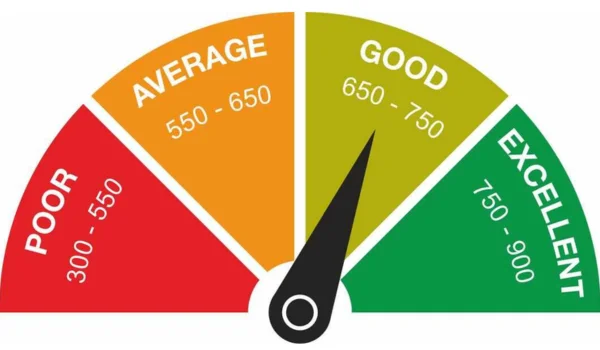
CIBIL scores range from 300 to 900. Generally, a higher score indicates a stronger credit history and can improve the likelihood of being viewed favourably by lenders.
TransUnion CIBIL has also reported that scores above 750 have historically been associated with a large share of sanctioned loans, although that does not mean 750 is a universal approval threshold.
A lender can consider several other factors when assessing a personal-loan application, including income, existing obligations, employment or business profile, loan amount, repayment capacity and its own credit policy.
A useful way to think about the score is:
| CIBIL score | What it generally indicates |
| 300–549 | Lower score; credit history may require attention |
| 550–649 | Below the range many borrowers would ideally want |
| 650–749 | Mid-range profile; other factors become important |
| 750–900 | Generally viewed as a stronger credit profile |
These ranges are useful for orientation, not as guaranteed lending categories. Different lenders can apply different eligibility criteria.
There is also an important distinction between a low score and having no established credit history. A person who is new to credit may have limited information in their report rather than a history of poor repayment.
What Actually Affects Your CIBIL Score?
There is no single behaviour that determines the score.
TransUnion CIBIL identifies four important areas: payment history, credit mix, multiple enquiries and credit utilisation.
Payment history
This is one of the clearest signals in a credit report.
If an EMI or credit-card payment is reported late, it can negatively affect the credit profile. A pattern of missed or delayed payments is more concerning than an isolated administrative mistake that is promptly corrected.
The practical lesson is simple:
Do not wait until the due date to discover that an automatic payment failed.
Keep enough balance in the repayment account and check that scheduled payments have actually gone through.
Credit utilisation
Credit utilisation describes how much of your available revolving credit you are using.
For example, if a credit card has a ₹2 lakh limit and the outstanding balance is ₹1.5 lakh, the card is being used at 75% of its available limit.
High utilisation can indicate greater dependence on available credit and may negatively affect the score.
This does not mean you should borrow unnecessarily just to create a particular utilisation percentage. It means that consistently carrying very high card balances is worth paying attention to.
Credit enquiries
Every time you apply for credit, the lender may access your credit report, creating an inquiry.
One enquiry is not the same thing as a rejection, and checking your own credit report is different from repeatedly applying for loans.
The concern is a pattern of multiple credit applications over a short period. CIBIL notes that frequent enquiries can have a negative impact on the score.
That is a good reason to compare loan options before submitting applications everywhere.
Credit mix
Credit profiles can contain secured and unsecured borrowing, such as home loans, vehicle loans, personal loans and credit cards.
CIBIL identifies credit mix as one of the factors that can influence the score.
That does not mean you should deliberately take different types of loans to “improve” your score.
Taking debt you do not need simply to manufacture a particular credit mix makes little financial sense.
How Can You Check Your CIBIL Score Online?
The first step is to use a legitimate credit-information service and obtain your score and report.
For someone searching for how to check CIBIL score online, the important part is not just getting the number. Read the report that accompanies it.
Look through:
- Your personal details.
- Active and closed credit accounts.
- Outstanding balances.
- Payment history.
- Recent enquiries.
- Accounts you do not recognise.
- Any overdue amount that appears incorrect.
Olyv also provides a credit score and credit report service that allows users to view credit information and review areas such as utilisation, loan history and enquiries.
Regardless of which service you use, the useful part of a credit check is what you do after seeing the number.
When Should You Check Your Credit Score?
There is no need to become obsessed with checking your score every day.
There are, however, situations when a review makes particular sense.
Before applying for a personal loan
This gives you an opportunity to identify potential issues before submitting an application.
Before applying for a home or vehicle loan
Larger borrowing decisions deserve advance preparation.
After closing a loan
Check that the account status has been updated correctly once the lender has reported the closure.
After repaying a major credit-card balance
A later report can help you see whether the balance information has been updated.
If you receive an unfamiliar credit alert
An account or enquiry you do not recognise deserves investigation.
Periodically as part of financial housekeeping
You do not need to check the report obsessively. A periodic review can help identify errors or unexpected changes.
RBI’s framework provides for one free full credit report, including the score, per calendar year for eligible individuals with credit history.
What Should You Look for in Your CIBIL Report?
The most useful credit check is not:
“Is my score above 750?”
It is:
“Does this report accurately describe my borrowing history?”
Go through the report systematically.
Check your personal information
Look for incorrect names, contact details or other identity information.
Check every loan account
Make sure the accounts listed actually belong to you.
Check the outstanding balance
An account you believe is fully repaid should not unexpectedly show an overdue amount.
Check account status
A closed loan should be reported accurately.
Check payment history
Look for delayed payments or overdue amounts that you believe are incorrect.
Check enquiries
If you see a lender enquiry that you do not recognise, investigate it.
Check joint or guaranteed accounts
A co-signed or guaranteed account can affect your credit profile because repayment problems on the associated account may have consequences for you as well. CIBIL specifically advises consumers to monitor such accounts.
How Can You Improve Your CIBIL Score?
There is no legitimate shortcut that can instantly transform a weak credit history into a strong one.
Improvement generally comes from changing the underlying credit behaviour and allowing accurate repayment information to build over time.
Pay every EMI and bill on time
Payment discipline matters.
Set up reminders or automatic payments where appropriate, but do not assume an automatic payment succeeded without checking occasionally.
Keep revolving balances under control
If your credit cards are consistently close to their limits, work toward reducing the outstanding balance rather than repeatedly relying on the available limit.
Avoid unnecessary loan applications
If you are comparing personal loans, shortlist appropriate options before submitting applications.
Keep track of older accounts
Do not assume an account disappeared from your credit report simply because you stopped using it.
Review the report for errors
If information is incorrect, raise the issue with the relevant lender and credit information company.
Give the process time
Credit history reflects behaviour over time. Paying one bill on time does not instantly rewrite years of credit behaviour.
CIBIL itself recommends timely payments, controlled utilisation, moderation in new credit applications and regular review of the credit report.
Why Does a Credit Limit Matter?
Credit limit and credit utilisation are connected.
Suppose you have a credit-card limit of ₹1 lakh and regularly carry a ₹80,000 balance. Your utilisation is high.
Now suppose the lender increases the limit to ₹2 lakh while the balance remains ₹80,000. The utilisation percentage falls.
That does not mean requesting a higher limit is automatically the best way to improve your score.
A higher limit can be useful if it reflects a genuine change in your financial relationship with the lender and you do not respond by increasing your spending.
It becomes counterproductive if a higher limit simply encourages more borrowing.
For readers interested in the mechanics of credit limits, Olyv’s guide on how to increase your credit limit explains some of the factors borrowers may consider when requesting a higher limit.
The key principle remains the same: a larger credit limit is not extra income.
Can Checking Your Own CIBIL Score Lower It?
This is one of the most common credit myths.
Checking your own credit report is not the same as repeatedly applying for loans.
A lender enquiry is associated with a credit application. CIBIL separately records enquiries made by lenders when consumers apply for credit.
So a borrower should not avoid checking their own report out of fear that the act of monitoring their credit will automatically damage the score.
In fact, checking the report can help identify problems early.
Does Closing a Credit Card Improve Your CIBIL Score?
Not necessarily.
Closing an account changes the information in your credit profile, but there is no rule that says closing a credit card automatically increases your score.
Consider why the card is being closed.
If the card has an annual fee you do not want to pay, closure may be a reasonable personal-finance decision.
If the card is closed simply because someone believes closure itself will produce a higher score, the decision deserves more thought.
The effect of closing an account depends on the wider credit profile, including available credit, utilisation and account history.
In other words, do not make a financial decision purely to chase a score number.
How Long Does It Take to Improve a Low CIBIL Score?
There is no universal timetable.
The speed of change depends on what caused the low score in the first place.
Someone whose profile is affected mainly by high credit utilisation may see changes after their reported balances fall.
Someone with repeated late payments has a different problem: they need to establish a sustained record of timely repayment.
Someone dealing with an incorrect account or enquiry needs to have the underlying reporting issue investigated and corrected.
CIBIL notes that credit reports are based substantially on information supplied by credit institutions, and it cannot simply change a reported account without confirmation from the relevant lender.
That is why anyone trying to improve their profile should focus first on the underlying issue rather than looking for a quick score hack.
What If Your CIBIL Report Contains an Error?
This is a situation where checking your report can be especially valuable.
Suppose you paid off a loan several months ago but the report still shows an incorrect outstanding amount.
Or you notice an enquiry from a lender you never approached.
Do not ignore it.
First, identify the information that appears incorrect. Then contact the relevant lender or follow the dispute process provided by the credit information company.
CIBIL states that consumers can raise disputes regarding inaccurate information and that corrections to reported account information require confirmation from the relevant lender.
Keep supporting documents such as payment receipts, closure letters or relevant correspondence.
What Does a Low CIBIL Score Mean for a Personal Loan?
A low score can make borrowing more difficult, but it does not tell the entire story.
Lenders can have different eligibility rules, risk policies and pricing criteria. They may consider income, existing obligations, employment, loan amount and other information alongside credit history.
Someone with a lower score should therefore avoid assuming that every lender will make the same decision.
At the same time, applying to numerous lenders simply because the first application was unsuccessful may not be a sensible response.
A better approach is to understand why the profile is weak, correct errors where possible and compare realistic options carefully.
What Does “NA” or “NH” Mean on a Credit Report?
Not every person has an established credit history.
CIBIL’s documentation explains that an “NH” indication can occur in situations such as having no recent credit activity or limited information on the credit file.
This is different from having a poor repayment history.
A young professional who has never borrowed before may have little credit history simply because there has not been enough credit activity to assess.
That person should not respond by taking unnecessary loans merely to create a score.
Building credit should be a consequence of responsible borrowing, not the reason for borrowing.
What Are the Biggest CIBIL Score Myths?
Myth: A score above 750 guarantees a loan
Reality: A higher score can strengthen a credit profile, but lenders consider their own eligibility and risk criteria as well.
Myth: Checking your own score reduces it
Reality: Monitoring your own credit is different from multiple lender enquiries resulting from repeated applications.
Myth: Closing every credit card improves your score
Reality: Account closure can change the structure of your credit profile, but it is not an automatic score booster.
Myth: Taking a new loan improves your CIBIL score
Reality: New borrowing creates another credit obligation. What matters is how responsibly the credit is managed.
Myth: There is a guaranteed way to increase your score in 30 days
Reality: Improvement depends on the underlying problem and the subsequent credit behaviour.
Myth: A low score means no lender will ever approve you
Reality: Lenders have different policies, although a weaker credit profile can affect eligibility and borrowing terms.
How Can You Prepare Your Credit Profile Before Taking a Loan?
If you know you will need a personal loan in the next few months, preparation is better than last-minute damage control.
Start by checking the report.
Then ask:
- Are all my accounts accurate?
- Are there any overdue amounts?
- Am I carrying unusually high card balances?
- Do I recognise every recent enquiry?
- Have I recently applied for several loans?
- Are my existing EMIs comfortably affordable?
- Have recently closed accounts been updated correctly?
If everything looks accurate, focus on maintaining the profile rather than trying to manufacture a higher score.
If you find an error, address it before making a major credit application where possible.
When Should You Avoid Applying for More Credit?
Sometimes the smartest credit decision is to wait.
For example, if you already have several outstanding loans, high credit-card utilisation and a number of recent enquiries, immediately adding another loan may increase the pressure on your monthly finances.
Ask yourself why you need the new borrowing.
If it is for a genuine planned expense and the repayment fits your budget, compare suitable options.
If the purpose is to pay another EMI because your existing income is no longer covering your commitments, the underlying cash-flow problem deserves attention first.
A CIBIL score can describe part of your credit history.
It cannot tell you whether another EMI fits your household budget.
FAQs About CIBIL Scores
What is a CIBIL score?
A CIBIL score is a three-digit summary of credit history used as an important input when lenders evaluate credit applications. CIBIL scores range from 300 to 900.
How can I check my CIBIL score?
You can obtain your CIBIL score and credit report through CIBIL and other legitimate credit-monitoring services. RBI also provides for one free full credit report, including the score, each calendar year for eligible individuals with credit history.
What is considered a good CIBIL score for a personal loan?
A higher score is generally viewed more favourably, and scores above 750 have historically been associated with a large share of sanctioned loans. However, there is no universal score that guarantees approval from every lender.
Does checking my CIBIL score reduce my score?
Checking your own report is different from a lender enquiry generated when you apply for credit. Consumers should not avoid monitoring their credit report because of this misconception.
How can I improve my CIBIL score?
Focus on timely repayments, responsible credit utilisation, avoiding unnecessary credit applications and reviewing your report for inaccurate information.
Does paying off a loan increase your CIBIL score immediately?
Not necessarily. The effect depends on the wider credit profile and when the lender reports the updated account information.
Can I get a personal loan with a low CIBIL score?
Possibly, depending on the lender’s criteria and your overall financial profile. A low score can make approval or favourable pricing more difficult, but it is not a universal automatic rejection.
Does a high credit-card limit improve my CIBIL score?
Not by itself. What matters is how the available credit is managed. A larger limit with high outstanding balances can still indicate substantial credit utilisation.
How often should I check my credit report?
There is no need to check it compulsively. Periodic reviews are useful, particularly before major borrowing decisions and when you suspect that information may have changed or been reported incorrectly.
What should I do if I find an incorrect loan or enquiry?
Check the details, gather supporting documents and raise the issue through the appropriate lender and credit-information-company dispute process. CIBIL notes that reported account information generally requires confirmation from the relevant lender to be changed.
The Bottom Line
Your CIBIL score is useful, but it is not your entire financial identity.
A number can tell a lender something about your credit history. It cannot explain why your score changed, whether a reported account is accurate, how comfortably you can afford another EMI or whether taking another loan is a sensible decision.
That is why the better habit is to look at the score and the report together.
Check your repayment history. Look at your outstanding balances. Review credit utilisation. Scan recent enquiries. Make sure old accounts are reported correctly. If something looks wrong, investigate it rather than simply accepting the number.
And if you are preparing to borrow, do not wait until the application screen asks for your credit score.
Understanding your credit profile beforehand gives you something more useful than a “good” or “bad” label: it gives you a clearer picture of the borrowing decisions you can realistically make.