boAt has built a large consumer-electronics business by selling stylish audio products at prices affordable to Indian buyers. The company became popular through earphones and charging cables before expanding into wireless earbuds, headphones, speakers, soundbars, smartwatches, power banks, gaming accessories and other electronic products.
Unlike a streaming platform, boAt does not earn from music subscriptions or advertisements played inside songs. It makes money primarily by designing, branding and selling electronic devices. Products are distributed through online marketplaces, boAt’s website and physical retail stores.
The boAt brand was launched in 2016 by Aman Gupta and Sameer Mehta. Its legal owner and operator is Imagine Marketing Limited.
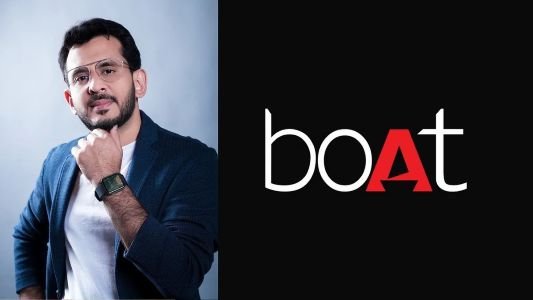
boAt Company Quick Overview
| Particular | Details |
| Brand | boAt |
| Legal company | Imagine Marketing Limited |
| Brand launched | 2016 |
| Founders | Aman Gupta and Sameer Mehta |
| Registered and corporate office | Mumbai, Maharashtra |
| Chief Executive Officer | Gaurav Nayyar |
| Executive Director | Sameer Mehta |
| Whole-Time Director and CMO | Aman Gupta |
| Business type | Consumer electronics and lifestyle-technology company |
| Main categories | Audio, wearables, mobile accessories, gaming and personal electronics |
| FY25 revenue from operations | ₹3,070.38 crore |
| FY25 consolidated profit after tax | ₹61.08 crore |
Gaurav Nayyar currently serves as boAt’s CEO. Sameer Mehta is Executive Director, while Aman Gupta is Whole-Time Director and Chief Marketing Officer. The company’s registered and corporate office is in Andheri, Mumbai.
What Is boAt’s Business Model?
boAt follows a product-led, omnichannel consumer-electronics model. It studies customer demand, develops product specifications and sells devices under its own brands.
The company works with manufacturing partners rather than producing every component and finished device entirely within facilities owned by boAt. It controls important activities such as product selection, design, branding, pricing, quality checks, marketing and distribution.
Products reach customers through:
- Online marketplaces
- boAt’s website
- Electronics chains
- Mobile and accessory stores
- Regional distributors
- Corporate and bulk orders
This approach allows boAt to reach online shoppers as well as customers who prefer examining a product in a physical store.
How Does boAt Make Money?
1. Wireless Earbuds and Earphone Sales
Audio products are boAt’s largest revenue source. The category includes true wireless earbuds, neckbands, wired earphones and wireless headphones.
boAt earns the difference between the product’s selling price and the combined cost of components, manufacturing, packaging, transportation, marketplace charges, discounts and warranties.
Audio generated ₹2,586.04 crore in FY25, representing approximately 84.2% of boAt’s revenue from operations. This means the company continues to depend heavily on its original audio business.
boAt offers products at several price levels. Entry-level products attract first-time buyers, while features such as active noise cancellation, long battery life and premium sound help it sell higher-priced models.
2. Speakers, Soundbars and Home Audio
boAt sells portable Bluetooth speakers, party speakers, soundbars and home-audio systems. These products usually have higher selling prices than ordinary earphones.
A customer purchasing a soundbar may spend several thousand rupees in a single transaction. Higher order values can produce greater gross profit, although large products also cost more to manufacture, store and transport.
Home audio allows boAt to serve customers beyond personal listening. It also helps the company compete in entertainment categories associated with televisions, parties and home theatres. The company’s current catalogue includes wireless speakers, soundbars and party speakers.
3. Smartwatch and Wearable Sales
boAt sells smartwatches offering functions such as Bluetooth calling, activity tracking, heart-rate monitoring and sports modes.
Wearables generated ₹330.41 crore in FY25, contributing approximately 10.8% of revenue from operations. However, the segment reported a loss, showing that high sales do not automatically produce profit.
Smartwatches face intense price competition and rapid product changes. New models must be introduced regularly because customers quickly begin expecting larger screens, better sensors and longer battery life.
4. Mobile Accessories and Charging Products
boAt sells charging cables, wall chargers, car chargers, power banks and wireless-charging products.
These products generally have lower selling prices than soundbars or premium headphones, but they address a large market. Cables and chargers also need replacement when they become damaged, lost or incompatible with a new device.
The company reports charging solutions, cables, grooming products and gaming equipment under its “other products” segment. This segment generated ₹153.93 crore in FY25.
5. Gaming and New Product Categories
boAt sells gaming headphones and earbuds through its Immortal range. It has also entered categories such as dashcams, projectors, trimmers and children’s electronic products.
New categories reduce dependence on earbuds and smartwatches. They also allow boAt to sell more products to customers already familiar with the brand.
However, entering too many categories can create inventory and quality-control problems. Each new line requires product development, supplier management, marketing and after-sales support. boAt’s current catalogue includes gaming devices, dashcams, projectors, trimmers and mobile accessories.
6. Direct Sales Through the boAt Website
Customers can purchase products directly from boAt’s website. Direct sales give the company greater control over pricing, customer information, product recommendations and promotional campaigns.
boAt does not need to pay the same marketplace commission on a direct website order. However, it must handle payment processing, warehousing, delivery, returns and customer support.
The website also offers personalised products, referral programmes, corporate orders and a dedicated gifting store. These features can increase order value and attract customers beyond ordinary retail purchases.
7. Online Marketplace Sales
Amazon, Flipkart and other online marketplaces have played an important role in boAt’s growth. These platforms provide large audiences, payment systems, product reviews and nationwide delivery support.
boAt receives revenue when its products are sold, but it may have to pay marketplace commissions, fulfilment fees and advertising charges. It may also fund discounts during major online sale events.
Marketplace visibility is valuable, but dependence on outside platforms creates pressure on pricing and margins.
8. Offline Retail and Distribution
boAt products are sold through electronics chains, mobile shops and other physical retailers. Offline distribution allows the company to reach customers who want to examine a speaker, smartwatch or headphone before purchasing.
Retailers and distributors purchase or sell products under agreed commercial arrangements and retain their margins. boAt earns from the products supplied through this network.
Offline sales can reduce dependence on online marketplaces, but the company must manage distributor credit, retail inventory and in-store promotions.
9. Corporate Gifting and Bulk Orders
Companies can purchase boAt products in bulk for employees, customers, events and promotional campaigns.
Bulk orders may involve headphones, speakers, smartwatches, power banks or customised products. The selling price per unit may be lower than normal retail pricing, but one corporate order can include hundreds or thousands of devices.
boAt promotes corporate orders and gifting directly through its official website.
boAt’s Major Operating Costs
boAt’s major costs include:
- Electronic components and raw materials
- Payments to manufacturing partners
- Product development and testing
- Warehousing and transportation
- Marketplace commissions
- Retailer and distributor margins
- Advertising and celebrity endorsements
- Discounts and promotional campaigns
- Warranty replacements and repairs
- Employee salaries and technology
Consumer electronics also lose value quickly. A smartwatch or earbud model may become difficult to sell after newer versions are introduced. boAt must therefore forecast demand carefully and avoid holding excessive old inventory.
Why boAt’s Model Can Be Profitable
boAt returned to profitability in FY25 after reporting losses during the previous two financial years. It recorded revenue from operations of ₹3,070.38 crore, EBITDA of ₹142.52 crore and consolidated profit after tax of ₹61.08 crore.
Profitability improves when the company sells a large number of products, negotiates lower manufacturing costs and controls discounts. Local manufacturing can also reduce delivery times and dependence on completely imported finished devices.
Audio remained profitable in FY25, while wearables continued to lose money. boAt must therefore strengthen newer categories without weakening the segment that produces most of its revenue.
Main Challenges in boAt’s Business Model
boAt competes with Indian and international brands across nearly every product category. Price competition can force the company to offer frequent discounts.
Electronic products also change quickly. A model can become outdated when competitors introduce better battery life, sound quality or features at the same price.
Dependence on outside manufacturers creates supply-chain and quality risks. Component shortages, currency movements or transportation delays can increase costs.
Warranty claims are another challenge. Defective batteries, charging problems or connectivity complaints may require repair or replacement, reducing the profit earned from the original sale.
FAQs
Q1. Is boAt an Indian company?
Yes. boAt is operated by Imagine Marketing Limited, an Indian company with its registered and corporate office in Mumbai. Its products may contain components or be manufactured through partners in different countries.
Q2. Does boAt manufacture every product in its own factories?
No. boAt uses contract manufacturers and supply-chain partners. It also has a manufacturing joint venture, while retaining control over branding, product requirements and distribution.
Q3. Why are boAt products frequently sold at large discounts?
The listed MRP may be considerably higher than the promotional selling price. Actual prices depend on competition, inventory, sale events, retailer offers and the age of the model.
Q4. Does boAt earn money from music streaming?
No. boAt mainly sells electronic hardware. It does not operate a major paid music-streaming service comparable to Spotify or Apple Music.
Q5. Is every boAt product made in India?
No. The country of origin can vary by model. boAt’s current product catalogue identifies India, China and Vietnam among the countries of origin for different products. Customers can check the product page or packaging for a specific model.
Conclusion
boAt makes most of its money by selling earbuds, earphones, headphones, speakers and soundbars. Smartwatches, charging accessories, gaming products, corporate orders and newer electronics provide additional revenue.
Its business depends on combining affordable prices with strong branding and wide distribution. Online marketplaces provide reach, physical stores improve availability and direct website sales give boAt greater control over customer relationships.
Long-term success will depend on protecting its audio leadership, improving wearable profitability and managing rapid changes in consumer technology. The company must also maintain quality while controlling manufacturing, advertising, discount and warranty costs.