Pepperfry has made it easier for Indian customers to purchase furniture without visiting numerous local shops. Its website, mobile platform and physical studios allow people to compare designs, materials, dimensions and prices before ordering furniture or home décor products.
However, Pepperfry is not simply an online furniture retailer. It operates an omnichannel marketplace connecting customers with furniture manufacturers, national brands, regional sellers and design-led businesses. It also manages physical experience centres, furniture logistics, bulk orders and commercial interior projects.
Pepperfry mainly makes money by earning commissions on products sold through its marketplace. Margins from selected product ranges, home décor sales, business orders, interior solutions and logistics services provide additional income.
Pepperfry Company Quick Overview
| Particular | Details |
| Company name | Pepperfry Limited |
| Founded | 2012 |
| Founders | Late Ambareesh Murty and Ashish Shah |
| Headquarters | Mumbai, Maharashtra |
| Co-founder and CEO | Ashish Shah |
| Current parent company | TCC Concept Limited |
| Industry | Furniture, home décor and e-commerce |
| Core business model | Omnichannel furniture marketplace |
| Main categories | Furniture, furnishings, décor and home essentials |
| Sales channels | Online platform and physical studios |
| Logistics division | PepCart |
| FY2025 turnover | Approximately ₹164.18 crore |
| Latest profitability milestone | First profitable quarter recorded in Q4 FY2026 |
TCC Concept completed the acquisition of a 98.98% stake in Pepperfry in December 2025, making the furniture platform one of its subsidiaries. Pepperfry continues to operate under its existing brand and is led by co-founder Ashish Shah.
What Is the Pepperfry Business Model?
Pepperfry follows a marketplace-based omnichannel business model. Furniture manufacturers, merchants and brands list their products on the platform, while Pepperfry helps customers discover, compare and purchase them.
The seller is responsible for supplying the product, but Pepperfry manages important parts of the transaction, including the digital storefront, customer acquisition, order processing, logistics coordination, installation and after-sales support.
Pepperfry officially describes itself as an omnichannel marketplace. Under this structure, it recognises the commission earned on the value of furniture and home products delivered through the platform as operating revenue, rather than recognising the complete customer payment as its own revenue.
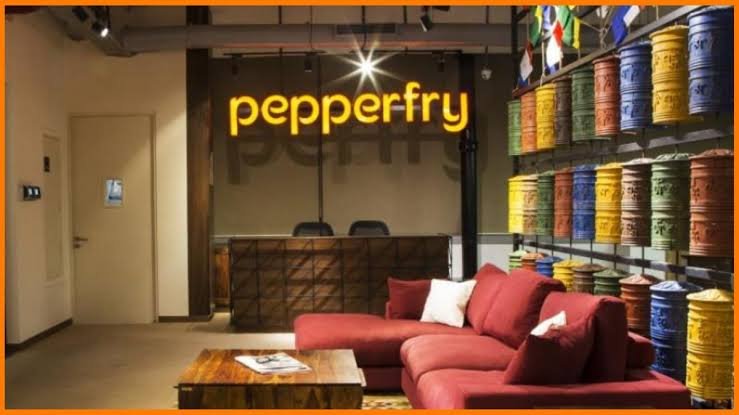
Its physical studios support the digital marketplace. Customers can visit a studio, examine selected furniture, discuss measurements and receive design assistance before placing an order. The complete catalogue does not need to be stored inside every studio.
How Does Pepperfry Make Money?
1. Commissions from Marketplace Sellers
Marketplace commissions are the foundation of Pepperfry’s business model. Manufacturers and furniture brands list products on the platform and gain access to Pepperfry’s customers, studios and distribution network.
When a customer buys a product, most of the selling price belongs to the merchant or brand supplying it. Pepperfry retains an agreed commission for facilitating the transaction.
The commission can vary according to the product category, seller agreement, price, logistics requirement and promotional arrangement. Large furniture pieces may involve different economics from smaller décor products.
For example, if a customer buys a table for ₹20,000, Pepperfry does not necessarily record the full ₹20,000 as revenue. It records the commission and eligible service income retained after settling the seller’s share.
2. Margins from Exclusive and Private-Label Products
Pepperfry also offers selected products and collections over which it may have greater control regarding design, sourcing, branding and pricing.
These products can generate better margins than ordinary third-party marketplace listings. Instead of earning only a platform commission, Pepperfry may participate more deeply in the value created between the manufacturing cost and final selling price.
Private-label and direct-to-consumer products represented more than 45% of Pepperfry’s gross delivered value in FY2023. Although the current percentage has not been separately disclosed, this illustrates why exclusive ranges have been strategically important to the company.
However, greater control also creates additional responsibility for sourcing, quality checks, inventory planning, returns and product development.
3. Sales Generated Through Pepperfry Studios
Pepperfry Studios are physical experience centres where customers can examine furniture samples, explore materials and receive assistance from design consultants.
These studios do not need to carry the complete online catalogue. They mainly help customers become more confident about purchasing expensive products that they may hesitate to order after seeing only photographs.
Some studios are operated by Pepperfry, while others follow a franchise-owned, franchise-operated model. Franchise partners invest in and manage the location and receive commissions based on eligible sales. Pepperfry benefits by expanding its physical presence without bearing the complete cost of every new store.
The company announced in July 2026 that it planned to add 35 stores before the festive season and expand its retail footprint beyond 250 locations in the near term.
4. Home Décor and Furnishing Sales
Furniture is generally purchased infrequently, but smaller home products can generate more regular orders. Pepperfry sells lamps, rugs, curtains, mattresses, kitchen products, wall décor, mirrors and other home accessories.
These products can increase the total value of an order. Someone purchasing a bed may also buy a mattress, side table, lamp or bedsheet.
Smaller décor products are also easier and less expensive to store and deliver than large furniture. Pepperfry’s recent strategy has placed greater attention on home décor and design-led consumer brands to encourage more frequent customer visits.
5. Modular and Interior Solutions
Pepperfry offers design support for customers seeking customised or coordinated home interiors. These services may include modular storage, kitchens, wardrobes and other made-to-measure solutions.
The customer pays for design, materials, manufacturing, delivery and installation as part of the project. Pepperfry earns according to the margin or service arrangement attached to the work.
Interior projects can produce higher order values than individual furniture sales. However, they also require accurate measurements, skilled installation, project supervision and stronger after-sales support.
6. B2B and Bulk Furniture Orders
Pepperfry also serves companies, hotels, restaurants, offices, property developers and other institutional customers requiring furniture or home products in bulk.
A business customer may place one large order for desks, chairs, storage units or furnishings across several locations. Pepperfry earns through product margins, marketplace commissions, sourcing fees and project services.
Bulk orders may carry lower margins per product because commercial buyers negotiate prices. However, their size and repeat potential can make them valuable.
Pepperfry states that it has completed more than 100 bulk-order projects and developed a sourcing network covering thousands of manufacturers across different designs and price ranges.
7. Commercial Design and Build Projects
Pepperfry expanded into commercial interior projects after acquiring BrandMakerr in 2022.
This division provides design, civil construction and turnkey interior services for retail stores, restaurants, hotels, banks and other businesses. Pepperfry can earn project-management fees and margins on materials, furniture and execution.
Commercial design projects give the company an opportunity to use its supplier relationships and furniture expertise beyond individual household orders. Pepperfry says BrandMakerr has worked with companies in retail, hospitality and food-service industries.
8. Logistics and Fulfilment Services
Furniture delivery is more complicated than ordinary e-commerce delivery. Products are large, vulnerable to damage and may require assembly inside the customer’s home.
Pepperfry operates its specialised logistics network through PepCart. The network provides first-mile pickup, warehousing, last-mile transportation and furniture assembly.
PepCart serves customers and sellers across hundreds of cities and has delivered more than 10 million shipments. Pepperfry may recover logistics costs through seller agreements, product pricing, delivery charges or external fulfilment arrangements.
A reliable logistics network also supports Pepperfry’s marketplace commissions by helping more orders reach customers without damage.
Major Costs in the Pepperfry Business Model
Logistics is one of Pepperfry’s largest expenses. Large products require warehouses, specialised vehicles, trained delivery workers, protective packaging and assembly teams.
Other major costs include:
- Employee salaries and technology
- Digital advertising and brand promotion
- Studio operations and franchise support
- Seller onboarding and quality control
- Product returns and transit damage
- Warehousing and distribution centres
- Customer support and after-sales service
Pepperfry must also spend money on discounts to remain competitive. Excessive discounting may increase order volume but reduce the amount earned from each transaction.
Latest Financial Position
An official TCC Concept disclosure reported Pepperfry’s FY2025 turnover at approximately ₹164.18 crore. Different financial databases may present slightly different figures depending on whether they use operating revenue, total income or consolidated accounts.
Complete standalone FY2026 financial results have not been publicly disclosed in the same detail. However, TCC Concept announced that Q4 FY2026 was the first profitable quarter in Pepperfry’s history. The company attributed the milestone to improved operating efficiency and stronger omnichannel economics.
Why the Pepperfry Business Model Can Work
Pepperfry’s marketplace structure allows it to offer a large selection without manufacturing or permanently owning every item.
Its studios solve an important problem in online furniture retail: customers often want to see materials, test comfort and understand dimensions before spending a large amount.
The franchise model supports physical expansion, while PepCart gives Pepperfry more control over the difficult delivery and assembly process. Together, the website, studios and logistics network create an integrated shopping experience.
Challenges Facing Pepperfry
Furniture purchases are less frequent than purchases of groceries, clothing or beauty products. Pepperfry must therefore spend carefully on acquiring customers who may not return for several months or years.
Product returns are also expensive. A returned sofa or wardrobe may require disassembly, specialised transport, storage and inspection.
Competition comes from local furniture shops, independent carpenters, large online marketplaces and organised brands. Pepperfry must balance product variety, quality, delivery speed and pricing while moving towards sustained profitability.
FAQs
Q1. Does Pepperfry manufacture all the furniture it sells?
No. A large part of the catalogue comes from independent manufacturers, merchants and furniture brands. Pepperfry also offers selected exclusive and controlled product ranges.
Q2. Can customers see every online product inside a Pepperfry Studio?
No. Studios generally display a curated selection. Consultants can help customers explore additional designs and options available through the digital catalogue.
Q3. Are prices different in studios and on the website?
Pepperfry promotes price parity between its online platform and studios. However, final prices can change when promotions, coupons or payment offers apply.
Q4. Who provides the warranty on a Pepperfry product?
Warranty terms depend on the product, manufacturer and seller. Pepperfry may coordinate support, but customers should check the warranty and return conditions shown on the specific product page.
Q5. Does Pepperfry own all its physical studios?
No. Its network includes both company-operated and franchise-operated locations. The franchise structure helps the company expand its physical reach with lower direct investment.
Conclusion
Pepperfry makes most of its money by collecting commissions from furniture and home-product sellers using its marketplace. Exclusive product margins, décor sales, studio-assisted purchases, commercial interiors and bulk business orders provide further revenue.
Its PepCart logistics network supports these activities by managing the movement and assembly of large products. The company’s future performance will depend on increasing sales through its online and offline channels while controlling logistics, marketing, return and studio-expansion costs.