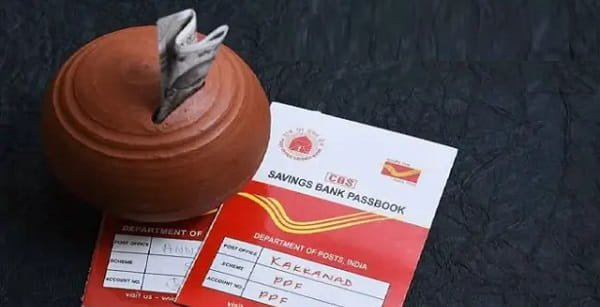
While clearing out his late father’s almirah, Sandeep found a small green passbook tucked inside an old Bhagavad Gita. The cover read “Post Office Savings Bank.” The last entry was dated 1987. The balance showed ₹4,200.
His first thought was, “Is this even worth anything today?”
A quick calculation by his CA gave him a surprising answer. With four decades of compounded interest at various rates, the same ₹4,200 could now be worth anywhere between ₹65,000 and ₹1.5 lakh, depending on the scheme and interest patterns.
But finding the money was easier said than done. Sandeep spent the next 6 months navigating post offices, KYC formalities, and dusty registers. He eventually got the money, but the journey taught him lessons every Indian family should know.
If you have just found an old passbook, this guide is for you.
Why Old Post Office Passbooks Still Hold Value
The Indian Post Office has been one of the most trusted financial institutions for over 150 years. Many families opened accounts in the 1960s, 70s, and 80s under schemes like:
- Post Office Savings Account
- National Savings Certificate (NSC)
- Kisan Vikas Patra (KVP)
- Public Provident Fund (PPF)
- Monthly Income Scheme (MIS)
- Recurring Deposit (RD)
- Time Deposit (TD)
Most of these schemes continue to exist. Even if the account holder has passed away or simply forgot about the deposit, the money does not disappear. It sits quietly in government records, often earning interest, waiting to be claimed.
What Happens to Unclaimed Post Office Money
If a post office account remains inactive for 3 years (savings account) or matures without claim (term schemes), it is classified as “Silent” or “Dormant.”
After 10 years of inactivity, unclaimed deposits are transferred to the Senior Citizens’ Welfare Fund (SCWF), a government corpus.
But here is the good news — the money is never permanently lost. Even after transfer to SCWF, the rightful owner or legal heir can claim it back, with interest, by following the correct process.
Step-by-Step Process to Track Down the Money
Step 1: Identify the Type of Account
Look at the passbook cover and inside pages carefully. Different schemes have different shapes, colours, and headers:
- Green passbook usually means Post Office Savings Account
- Yellow or beige cards may be NSC or KVP
- A printed booklet with monthly entries is likely RD or MIS
Note the account number, opening date, scheme name, and last transaction date.
Step 2: Locate the Original Post Office Branch
The passbook usually mentions the post office branch where the account was opened. If the branch still exists, that is your starting point.
If the branch has merged, closed, or shifted, visit the nearest post office and ask them to trace the parent branch. They have access to internal directories.
Step 3: Carry the Right Documents
Before visiting, prepare a complete set:
- Original old passbook (or copy if lost)
- Aadhaar card of the claimant
- PAN card of the claimant
- Death certificate (if the account holder has passed away)
- Legal heir certificate or succession certificate
- Self-attested passport-size photographs
- Bank account details (cancelled cheque)
- Affidavit declaring the relationship and claim (on stamp paper)
A nominee mentioned in the passbook makes the process significantly easier. A claim without a nominee requires legal heir verification, which takes longer.
Step 4: Submit a Written Application
At the post office, request Form SB-7A (account revival or transfer of money) or Claim Form (in case of death of account holder).
Mention clearly:
- Account holder’s name and account number
- Last known balance
- Reason for delay in claim
- Whether the account holder is alive or deceased
- Your relationship to the holder
Attach all documents and get an acknowledgement copy with the post office stamp and date.
Step 5: Complete Fresh KYC
Even if the original account holder did KYC decades ago, modern rules require fresh KYC at the time of claim. This involves:
- Aadhaar-based verification
- Photograph
- Updated signature record
- Mobile number and email registration
If the account holder is no longer alive, the claimant submits their own KYC.
Step 6: Wait for Verification
The post office verifies the records by cross-checking their internal ledger, the original branch file, and the central server.
For old paper-based records, this can take anywhere from 15 days to 6 months, depending on how digitised the parent branch is.
Step 7: Receive the Money
Once approved, the amount is credited to your bank account via electronic transfer. Some old schemes also allow cheque issuance if you prefer.
What If the Passbook Is Lost
Even without the passbook, you can still recover the money if you have:
- The original account number
- The name and date of birth of the account holder
- Some reference like an old receipt, bond certificate, or correspondence
Submit a lost passbook indemnity bond along with the claim form. The post office issues a duplicate passbook before processing the claim.
If you do not have the account number at all, but know the post office branch and account holder’s name, the staff can search using internal search tools — though success depends on how well-maintained their archives are.
How to Handle Inherited Accounts
If the original holder has passed away, two scenarios apply.
1. If a Nominee Was Registered
The nominee submits a death certificate, ID proof, and claim form. The money is paid directly to them. This is the fastest route.
2. If No Nominee Exists
Legal heirs must submit:
- Death certificate
- Legal heir certificate from a Tehsildar or court
- Succession certificate if the amount exceeds a certain limit
- No-objection certificates from other potential heirs
- Affidavit declaring entitlement
This process can take several months and may require minor legal help, especially if multiple heirs exist.
Special Cases You Should Know
1. Matured NSC or KVP Lying Forgotten
These certificates continue to earn interest only up to maturity. After maturity, no further interest is paid, but the principal plus interest remains payable. Submit the original certificate at the post office along with KYC.
2. Old PPF Account
PPF accounts have 15-year terms. If matured and unclaimed, they continue to earn interest at the prevailing PPF rate until claimed. Some old accounts have been earning quietly for 20 years or more.
3. Monthly Income Scheme (MIS)
If MIS was not closed at maturity, the principal stays in the account. No further monthly payouts occur, but the principal can be withdrawn anytime.
4. Pre-2000 Accounts
Records before 2000 are often paper-based. Be patient. The branch may need to physically retrieve old registers from archives.
Common Mistakes to Avoid
- Throwing away old passbooks thinking they have no value
- Not informing other family members about old deposits
- Delaying the claim further, hoping someone else will handle it
- Trusting unauthorised “agents” who claim to recover money for a fee
- Missing the chance to update nominee details in active old accounts
The Indian Post is generally helpful but bureaucratic. Patience and persistence are your best tools.
Final Thoughts
Old passbooks are not just paper. They are memory, legacy, and often hidden wealth that your parents or grandparents quietly saved for the family. Decades of compounded interest can turn modest deposits into substantial sums today.
The system to reclaim this money exists, works, and is free. The only thing standing between you and the funds is the willingness to walk into a post office, ask the right questions, and follow up patiently.
If you ever come across an old passbook in your family’s belongings, treat it like a treasure clue. Behind that faded ink may sit a financial inheritance that your loved ones meant for you to find.
FAQs
Q: Is there a time limit to claim old post office money?
A: No. There is no expiry on rightful claims, even decades after the deposit.
Q: Does the money still earn interest after the account becomes dormant?
A:For most schemes, yes. Savings accounts continue to earn at the prevailing rate. NSC and KVP stop earning after maturity.
Q: Can I claim my grandfather’s old account without a nominee?
A:Yes, but you will need a legal heir certificate and possibly a succession certificate depending on the amount.
Q: Is there a fee for claiming old deposits?
A: No official fee. Beware of agents demanding money to help you claim — the process is free.
Q: What if the original branch no longer exists?
A: The nearest active post office can trace the parent branch through internal records.
Q: Are joint accounts handled differently?
A: Yes. The surviving holder can claim directly with a death certificate of the deceased co-holder.
Q: Can I check old account details online?
A:Limited online tracking is available via the India Post portal, but most old account searches still require a physical post office visit.