By 2026, the Indian textile industry is no longer operating on legacy momentum alone. It is moving into a policy-backed, sustainability-driven, and export-resilient growth phase. What was once a fragmented, cotton-heavy sector is now being reshaped through mega infrastructure parks, targeted production incentives, traceable raw materials, and renewed trade negotiations.
Despite global demand uncertainty, the industry has shown resilience—exports have grown, investments have accelerated, and compliance standards have risen. However, structural gaps in energy transition, technology depth, and waste management still pose challenges. This SWOT analysis reflects the true operating reality of India’s textile industry in 2026.
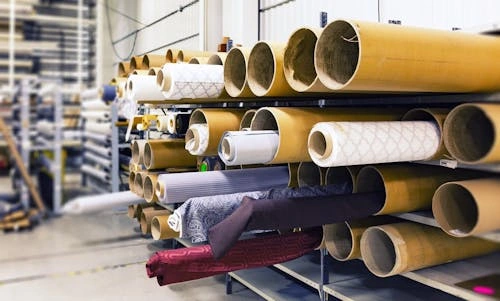
Textile Industry overview
| Aspect | 2026 Status |
| Market size | ~$225 billion |
| Export contribution | ~$21+ billion (H1 FY25) |
| Employment | ~45 million direct jobs |
| Export growth | ~7% YoY |
| Value-chain spread | Fibre to finished garments |
| Strategic thrust | MMF, technical textiles, ESG compliance |
Strengths
Policy momentum through PM-MITRA mega parks
The PM-MITRA scheme has moved from intent to execution. Infrastructure work worth ₹2,590 crore is underway across the 7 approved mega textile parks. The Dhar Park (Madhya Pradesh), whose foundation was laid in September 2025, has emerged as the flagship execution project for 2026.
These parks are designed to integrate spinning, weaving, processing, and garmenting within a single ecosystem—reducing logistics costs and improving speed-to-market.
PLI scheme gaining real traction
After initial delays, the Production Linked Incentive (PLI) scheme has gained momentum. As of late 2025:
- 91 companies have been approved
- Investments have crossed ₹7,700 crore
- Provisional incentives have started flowing to manufacturers meeting FY25 targets
This marks a decisive shift from low-value commodity textiles toward MMF-based and technical textile production.
Export resilience despite global headwinds
Even amid weak global consumption, textile exports grew ~7% in H1 FY25, crossing $21 billion (April–October 2025). This resilience underscores India’s strengthening position as a diversified sourcing hub for US and EU buyers.
Leadership in water sustainability
A major, often underappreciated strength is water management. By FY25:
- 74% of listed textile companies adopted Zero Liquid Discharge (ZLD) systems
- India has emerged as a global benchmark in sustainable water use for textiles
This is increasingly critical as global buyers tighten ESG audits.
Kasturi Cotton Bharat: traceability advantage
India’s premium cotton branding under Kasturi Cotton Bharat is now operational. By 2026, QR-code-based traceability is becoming standard for Indian cotton exports to the EU—helping manufacturers pass sustainability and origin audits more easily.
Weaknesses
Renewable energy adoption remains low
Despite sustainability branding, renewable energy accounts for only ~8% of the sector’s energy mix in early 2026. The dyeing and processing segments still rely heavily on coal-based thermal energy, creating a gap between ESG reporting and actual emissions reduction.
Technical textile under-penetration
Technical textiles contribute only ~13% of India’s textile market, compared to 30–70% in developed economies. While policy intent is strong, execution depth and skill availability remain limited.
Fragmentation at the lower end
A significant portion of weaving and garmenting units remain small-scale and unorganised, limiting productivity, automation adoption, and bargaining power with global buyers.
High compliance burden for MSMEs
While large players adapt quickly, smaller manufacturers struggle with rising ESG, traceability, and reporting costs—risking exclusion from premium export supply chains.
Opportunities
Technical Textile Mission acceleration
The government is targeting a $40–50 billion domestic technical textile market by 2026. Supporting measures include:
- Customs duty exemption on high-tech looms (Rapier & Air Jet) in the 2025 Budget
- Focus on medical, industrial, geotextiles, and protective wear
This is one of the highest-margin opportunities for the industry.
Global trade realignment (US–China shift)
With fresh US tariffs on Chinese goods expected in 2026, Indian exporters are actively repositioning. Competitive pricing and compliance upgrades are helping India target the $137 billion EU apparel import market more aggressively.
UK–India FTA potential
Trade negotiations resumed in late 2025, with 2026 viewed as a decisive year. A successful FTA could enable duty-free garment access to the UK, significantly benefiting export clusters like Tiruppur, Ludhiana, and Surat.
MMF and blended fabric expansion
PLI-backed investments are accelerating India’s shift toward MMF and blended fabrics, aligning production with global fashion demand.
Rise of domestic brands and D2C
Indian fashion brands, e-commerce platforms, and D2C labels are driving demand for small-batch, fast-turnaround manufacturing, opening new opportunities for agile suppliers.
Threats
Quality Control Orders (QCOs) risk
Mandatory Quality Control Orders on textile machinery (looms, embroidery machines) will take full effect by September 1, 2026. If domestic machinery supply does not scale quickly, smaller weavers could face sharp cost inflation or production delays.
Waste generation spike
Waste intensity in the textile industry rose ~19% in 2025. While partly due to improved reporting, unmanaged waste poses a serious ESG compliance risk, particularly for European buyers.
Competition from lower-cost exporters
Bangladesh, Vietnam, and Cambodia continue to offer cost advantages, pressuring margins for Indian exporters.
Raw material and energy volatility
Fluctuations in cotton prices, yarn costs, and fuel prices continue to impact profitability, especially for contract-based exporters.
Indian textile industry 2026: key metrics
| Metric | 2026 Reality | Strategic Impact |
| Market size | ~$225 billion | On track for $350B by 2030 |
| Export growth | ~7% YoY | Demand resilience |
| PLI investment | ₹7,731 crore | Shift to high-value textiles |
| ZLD adoption | ~74% of listed firms | ESG leadership |
| Technical textile share | ~13% | Major upside potential |
What this SWOT reveals about the industry
The Indian textile industry’s biggest strength in 2026 is structural alignment—policy, sustainability, and global sourcing trends are finally pointing in the same direction. However, the biggest risk lies in execution gaps, especially in energy transition and waste management.
Future outlook: beyond 2026
India’s textile industry is entering a decade of opportunity. If PM-MITRA parks execute on time, PLI incentives sustain momentum, and MMF/technical textiles scale meaningfully, India can emerge as a top-tier global textile manufacturing hub.
The winners will be those who invest early in automation, renewable energy, traceability, and ESG compliance, moving decisively from volume-led to value-led growth.
In conclusion, The Indian textile industry in 2026 is resilient, policy-supported, and opportunity-rich—but success now depends on speed, sustainability, and strategic execution, not just scale.