The automobile industry in India enters 2026 at a decisive phase of transformation. It remains one of the country’s most important industries—contributing significantly to GDP, employment, manufacturing output, and exports. From two-wheelers and passenger cars to commercial vehicles and tractors, the sector touches both urban mobility and rural livelihoods.
At the same time, the industry is undergoing structural change driven by electrification, stricter regulations, digitalization, and shifting consumer expectations. This SWOT analysis presents a clear, professional, and comprehensive view of the Indian automobile industry in 2026, covering every major internal and external factor.
a. Strengths
Large and growing domestic market
India is one of the world’s largest automobile markets by volume. A large population, rising urbanization, increasing disposable incomes, and a growing middle class provide strong long-term demand for personal and commercial mobility.
Strong manufacturing ecosystem
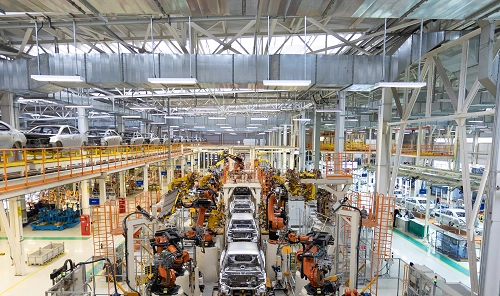
India has a well-developed automotive manufacturing base with global OEMs and domestic players operating at scale. The presence of a mature auto-components industry supports cost efficiency, localization, and export competitiveness.
Leadership in small and affordable vehicles
Indian automakers have deep expertise in designing cost-effective, fuel-efficient vehicles suited to local road and usage conditions. This capability gives India an advantage in entry-level and compact vehicle segments.
Improving export potential
India has emerged as an important export hub for small cars, two-wheelers, and auto components. Competitive costs and improving quality standards support export growth to emerging markets.
Government support and policy focus
Initiatives related to manufacturing, electrification, infrastructure development, and cleaner mobility provide long-term policy support to the industry.
b. Weaknesses
High sensitivity to economic cycles
Automobile demand is closely linked to economic conditions. Inflation, interest rate hikes, and reduced consumer confidence can quickly impact vehicle sales.
Low penetration of advanced technologies
Compared to developed markets, penetration of advanced driver assistance systems (ADAS), connected technologies, and safety features remains limited in mass-market vehicles due to cost constraints.
Infrastructure constraints
Charging infrastructure for electric vehicles and road infrastructure in some regions are still developing, limiting faster adoption of new mobility technologies.
Dependence on imports for key inputs
The industry relies on imports for semiconductors, battery materials, and certain high-end components, exposing it to global supply chain disruptions.
Margin pressure in mass segments
Intense competition and price sensitivity limit profitability, especially in entry-level passenger vehicles and two-wheelers.
c. Opportunities
Electric vehicle transition
The shift toward electric mobility is the biggest opportunity for the Indian automobile industry. EVs in two-wheelers, three-wheelers, passenger vehicles, and buses offer long-term growth potential.
Expansion of charging and battery ecosystem
Growth in battery manufacturing, recycling, charging infrastructure, and energy storage can create new value chains and reduce import dependence.
Rising demand for SUVs and premium vehicles
Consumer preferences are shifting toward SUVs, feature-rich vehicles, and better safety. This trend supports higher average selling prices and margin improvement.
Growth in shared and last-mile mobility
Electric three-wheelers, small commercial vehicles, and shared mobility solutions are expanding rapidly, driven by e-commerce and urban logistics demand.
Technological integration and digitalization
Connected vehicles, data analytics, over-the-air updates, and digital retail platforms can improve customer experience and open new revenue streams.
d. Threats
Intensifying competition
Competition from global automakers, domestic players, and new EV-focused startups is increasing. Price wars and feature competition can erode margins.
Regulatory and compliance pressure
Stricter emission norms, safety regulations, and future restrictions on internal combustion engines increase costs and require continuous investment.
Volatility in raw material prices
Fluctuations in steel, aluminum, rare earth metals, and battery materials directly impact manufacturing costs and profitability.
Rapid technological disruption
Fast-paced changes in battery technology, software-defined vehicles, and autonomous features increase the risk of technology obsolescence.
Environmental and sustainability challenges
Pressure to reduce carbon emissions, improve recycling, and ensure sustainable manufacturing increases compliance and capital expenditure requirements.
What this SWOT reveals about the Indian automobile industry
The Indian automobile industry in 2026 is strong in scale, manufacturing capability, and domestic demand, but it is also under pressure to reinvent itself. Traditional strengths in affordability and volume must now align with technology, sustainability, and safety.
Success will depend on how effectively manufacturers balance cost competitiveness with innovation, while managing regulatory demands and consumer expectations.
Future outlook: Indian automobile industry beyond 2026
Looking ahead, the Indian automobile industry is expected to grow steadily, with electric vehicles playing an increasingly central role. Two-wheelers, three-wheelers, and urban commercial vehicles are likely to electrify fastest, while passenger vehicles follow gradually.
The industry’s future will favor companies that invest early in EV platforms, battery ecosystems, digital capabilities, and export competitiveness. Collaboration between automakers, suppliers, policymakers, and energy providers will be critical.
In conclusion, The Indian automobile industry in 2026 stands at a crossroads—supported by scale and demand, challenged by disruption and regulation, and defined by its ability to transition toward cleaner, smarter, and more connected mobility.