IRCTC is closely connected with almost every stage of a railway passenger’s journey. People use its website or mobile app to reserve train tickets, order food, book retiring rooms, purchase tour packages and arrange other travel services. Its Rail Neer brand also supplies packaged drinking water at railway stations and on trains.
However, IRCTC does not earn the complete train fare paid by passengers. Railway fares mainly belong to Indian Railways. IRCTC earns through convenience fees, catering operations, tourism services, bottled-water sales, advertising and commissions from related travel products.
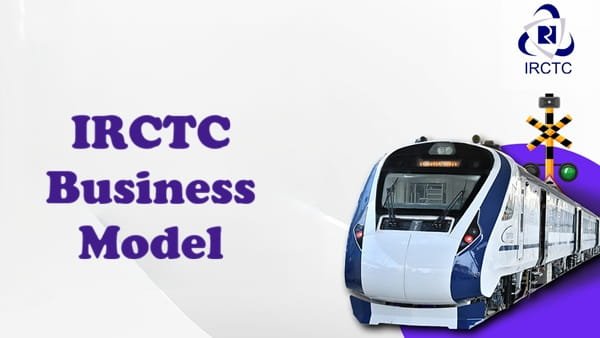
Its strongest advantage is access to the enormous passenger network of Indian Railways. This gives the company a large customer base without requiring it to build a separate transportation system.
IRCTC Company Quick Overview
| Particular | Details |
| Company name | Indian Railway Catering and Tourism Corporation Limited |
| Popular name | IRCTC |
| Incorporated | September 27, 1999 |
| Headquarters | New Delhi, India |
| Chairman and Managing Director | Rahul Himalian |
| Ownership type | Central Public Sector Enterprise |
| Administrative ministry | Ministry of Railways |
| Status | Mini Ratna Category-I |
| Core business model | Railway ticketing, catering, tourism and packaged water |
| Main business segments | Internet ticketing, catering, tourism and Rail Neer |
| FY2026 revenue from operations | Approximately ₹5,215 crore |
| FY2026 profit after tax | Approximately ₹1,393 crore |
IRCTC was established as an extended commercial arm of Indian Railways to improve catering, hospitality and tourism services. Rahul Himalian currently serves as the company’s Chairman and Managing Director.
What Is the IRCTC Business Model?
IRCTC follows a railway-services and travel-commerce model. It does not own most of the trains or railway tracks used by passengers. Instead, it operates commercial services connected with the Indian Railways network.
The company provides the technology used for online railway reservations. It also manages or supervises food services on trains and at stations, sells packaged drinking water and operates tourism products.
IRCTC earns directly from passengers in some businesses and through commissions, convenience fees, licences and service contracts in others. Its business therefore contains both business-to-consumer and business-to-business income.
How Does IRCTC Make Money?
1. Convenience Fees on Online Train Tickets
Internet ticketing is IRCTC’s most profitable business. When passengers reserve railway tickets through the IRCTC website or Rail Connect app, the company usually collects a convenience fee.
The convenience fee is separate from the actual railway fare. The main fare is collected for Indian Railways, while IRCTC recognises the permitted convenience fee and related service income as revenue.
The amount may differ according to the travel class, payment method and ticketing rules. Because millions of tickets are booked through the platform, even a relatively small charge per transaction produces considerable revenue.
During FY2024–25, IRCTC’s platforms accounted for 86.38% of all reserved Indian Railways tickets, with an average of 13.88 lakh e-tickets booked daily. Online ticketing’s share increased further to around 89% during FY2025–26.
2. Ticketing Agents and Business Partners
IRCTC authorises travel agents and online travel platforms to offer railway-ticket booking services. These partners connect their systems with IRCTC’s reservation infrastructure.
The company may earn registration charges, service fees or transaction-related income from authorised agents. The partner may charge its own permitted service fee to the customer in addition to IRCTC’s charges.
This arrangement expands IRCTC’s reach because passengers can book through different travel websites, apps and physical agents while the reservation is still processed through the railway ticketing system.
3. Advertising and Digital Partnerships
IRCTC’s website and app receive extremely high traffic. Banks, travel companies, payment providers and consumer brands can pay to display advertisements or promote services on these digital properties.
The company can also earn through promotional campaigns, push notifications, lead generation and cross-selling arrangements. Products promoted through its platforms may include insurance, credit cards, hotels, buses, flights and tour packages.
IRCTC recorded more than ₹14 lakh in Google Ad Manager revenue on its highest-earning advertising day during FY2024–25. Its large user base makes digital advertising a useful additional source of income.
4. Onboard Train Catering
Catering is IRCTC’s largest business by revenue. It manages food services on premium and regular passenger trains, including Rajdhani, Shatabdi, Duronto, Tejas and Vande Bharat services.
Depending on the train and contract, food charges may be included in the ticket price or paid separately by passengers. IRCTC may provide the service directly or appoint approved catering contractors.
It earns from food sales, service charges and commercial arrangements with catering partners. However, the company must pay for ingredients, kitchens, employees, transportation, equipment and quality monitoring.
IRCTC currently manages onboard catering services on more than 460 trains. Catering revenue reached approximately ₹2,399 crore in FY2025–26, making it the company’s biggest revenue segment.
5. Food Outlets at Railway Stations
IRCTC manages or licenses several food facilities at railway stations. These include food plazas, fast-food units, refreshment rooms, Jan Ahaars, base kitchens and executive lounges.
Some outlets may be operated directly, while others are run by private companies under licence. In licensed operations, IRCTC can earn fixed licence payments, revenue-sharing income or a combination of both.
The official catering network includes 144 food plazas and 160 fast-food units across India. These facilities allow IRCTC to earn from passengers before boarding and after completing their journeys.
6. E-Catering Commissions
IRCTC’s e-catering platform allows passengers to order meals from partner restaurants and receive them at selected railway stations during their journey.
Passengers enter their PNR details, select a restaurant and place an order. The restaurant prepares the food, while a delivery partner brings it to the passenger’s train seat or coach.
IRCTC does not necessarily prepare every e-catering meal itself. It can earn a commission or service fee from the restaurant or order value for providing the platform, customer access and delivery coordination.
This model expands the variety of food available without requiring IRCTC to operate a kitchen at every station.
7. Tourism Packages and Tourist Trains
IRCTC sells domestic and international holiday packages, pilgrimage tours, hotel bookings, air tickets, bus services and rail-based travel programs.
Its tourism portfolio includes Bharat Gaurav tourist trains, educational tours, state-sponsored pilgrimage schemes and special packages covering accommodation, meals, local transport and sightseeing.
The customer pays a package price, while IRCTC arranges services through railways, hotels, airlines, bus operators and local travel companies. The company keeps the amount remaining after paying these service providers and other operating expenses.
Tourism revenue reached approximately ₹890 crore in FY2025–26, increasing by about 19% from the previous financial year.
8. Rail Neer Packaged Drinking Water
IRCTC manufactures and sells packaged drinking water under the Rail Neer brand. Bottles are supplied to trains, railway stations and authorised catering establishments.
The company earns by selling bottles to railway passengers and commercial partners. It operates its own production plants and also works with plant operators under approved arrangements.
Rail Neer benefits from a ready market because safe packaged water is required across the railway network. However, its margins are affected by packaging, transportation, plant maintenance and raw-material expenses.
Rail Neer generated approximately ₹391 crore in revenue during FY2025–26.
9. Executive Lounges and Retiring Rooms
IRCTC manages selected executive lounges and railway retiring-room services. Passengers pay for temporary accommodation, seating, refreshments, internet access, bathing facilities and other amenities.
These services provide additional income from travellers who have long waiting periods or require short-term accommodation near railway stations.
Some facilities may be directly managed, while others operate through commercial partnerships. Revenue can come from room charges, lounge-entry fees and services purchased by passengers.
Major Costs in the IRCTC Business Model
IRCTC’s catering business has substantial operating costs. These include food ingredients, catering employees, kitchen operations, transportation, equipment, contractor payments and quality-control expenses.
Tourism costs include train operations, hotel rooms, meals, buses, guides and sightseeing arrangements. Rail Neer requires bottling plants, plastic packaging, water purification, electricity and distribution.
Internet ticketing has fewer physical costs, but IRCTC must invest in servers, cybersecurity, payment processing, fraud prevention, customer support and system upgrades. It must handle extremely high demand, particularly when Tatkal and advance reservations open.
Why the IRCTC Business Model Works
IRCTC has a unique position within the Indian railway system. Millions of passengers regularly need reservations, meals, water and tourism services, creating a large and repeat customer base.
Internet ticketing is especially valuable because one digital system can process millions of transactions without requiring a physical booking office for every customer. This provides high operating leverage and strong margins.
In FY2025–26, IRCTC recorded its highest-ever revenue from operations of approximately ₹5,215 crore. EBITDA reached ₹1,666 crore, while profit after tax stood at around ₹1,393 crore.
Challenges Facing IRCTC
IRCTC depends heavily on policies and decisions made by the Ministry of Railways. Changes to convenience fees, catering tariffs, train allocation or revenue-sharing arrangements can affect its earnings.
Food quality is another major challenge. Poor service from an appointed caterer can damage IRCTC’s reputation even when the food was prepared by an outside contractor.
The ticketing platform must also manage cyberattacks, automated booking tools, fraudulent accounts and sudden traffic increases. Service failures during busy booking periods can affect passenger trust.
Conclusion
IRCTC makes money through online ticketing convenience fees, onboard catering, station food outlets, tourism packages and Rail Neer water sales. It also earns from e-catering commissions, digital advertising, ticketing partners, retiring rooms and executive lounges.
Its most powerful advantage is its position within the Indian Railways network. The company can offer several paid services to a passenger through the same website, mobile app and railway journey. Future growth will depend on reliable ticketing technology, better food quality, tourism expansion and effective management of railway policies.
FAQs
Q. Does IRCTC keep the complete train-ticket fare?
No. The basic ticket fare mainly belongs to Indian Railways. IRCTC primarily earns convenience fees and other permitted income for operating the online reservation service.
Q. Does IRCTC own Indian Railways?
No. IRCTC is a government-controlled company under the Ministry of Railways, but it does not own the complete railway system, tracks or regular passenger trains.
Q. Why can food charges be included in some tickets?
Certain premium trains provide prepaid catering. The meal charge is collected with the ticket price and later used to provide the selected food service during the journey.
Q. Can private restaurants sell food through IRCTC?
Yes. Approved restaurants, food aggregators and delivery partners can participate in IRCTC’s e-catering network after meeting the required conditions.
Q. Is internet ticketing IRCTC’s largest revenue source?
No. Catering currently generates more revenue. However, internet ticketing is generally much more profitable because it has lower operating costs and stronger margins.