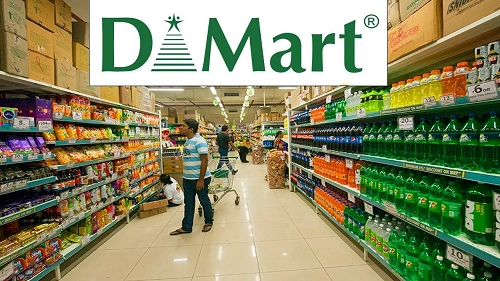
DMart enters 2026 as one of India’s most resilient and disciplined retailers. While competitors chase growth through discounts, apps, or rapid experimentation, DMart continues to win through operational rigor, asset ownership, and everyday value. It does not try to be everywhere or everything—and that restraint has protected margins in a volatile retail environment.
That said, 2026 is also a transition year. Leadership change, slowing like-for-like growth in mature stores, and the explosive rise of quick commerce are testing DMart’s traditional playbook. This SWOT reflects DMart’s real strategic position in 2026, incorporating store growth, leadership transition, private labels, and competitive pressure.
Company overview
| Aspect | Details |
| Company | Avenue Supermarts |
| Brand | DMart |
| Founded | 2002 |
| Founder | Radhakishan Damani |
| Headquarters | Mumbai, Maharashtra, India |
| Industry | Organized value retail |
| Core categories | Foods, FMCG, General Merchandise & Apparel |
| Business model | Everyday Low Pricing (EDLP) |
| Store network | 442 stores (Dec 2025) |
| Strategic focus (2026) | Cost leadership & execution discipline |
Strengths
Operational resilience and disciplined store expansion
DMart’s biggest strength in 2026 is predictability. As of December 2025, it operates 442 stores, adding roughly 10 stores per quarter—a pace that balances growth with execution control. Unlike aggressive retailers, DMart avoids overexpansion that can dilute unit economics.
Resilient unit economics backed by real estate ownership
DMart’s debt-free ownership model is a major structural advantage. The company owns 17.9 million sq. ft. of retail space, insulating it from the sharp rental inflation squeezing other retailers in 2026. This ownership buffer stabilizes margins even when sales growth moderates.
Unmatched cost discipline
Simple store layouts, limited SKUs, low marketing spends, and tight inventory turns keep operating costs structurally low. This allows DMart to offer consistently lower prices without relying on promotions.
Strong procurement power
High volumes and fast payments give DMart bargaining power with FMCG suppliers, reinforcing its EDLP promise and protecting gross margins.
Trust-driven repeat footfall
For middle-class households, DMart is a planned, bulk-purchase destination. This trust reduces churn even as competition intensifies.
Weaknesses
Navigating the post–Neville Noronha leadership transition
A key 2026 development is the retirement of long-time CEO Neville Noronha (effective January 2026) and the transition to Anshul Asawa. While continuity is expected, any leadership change introduces execution risk in a model where discipline and consistency are critical.
Moderating like-for-like (LFL) growth
In late 2025, DMart reported LFL growth of ~6.8% for mature stores (older than two years). This signals saturation in high-density urban catchments, where footfall growth is becoming harder to extract.
Limited digital capability
DMart’s online presence remains intentionally narrow. While this protects margins, it also limits reach among convenience-first consumers.
Heavy reliance on food-led sales mix
By 2026, 58% of revenue comes from foods, a lower-margin category, putting pressure on overall profitability as non-food growth moderates.
Opportunities
High-margin private label penetration
Private labels now account for 15–20% of shelf space in select categories. These products are priced 30–50% lower than national brands, improving DMart’s gross margins while reinforcing its value image. Scaling private labels is one of the clearest levers for margin expansion.
Tier-II and Tier-III city expansion as a profit shield
As metros become hyper-competitive due to quick commerce, DMart’s expansion into smaller cities such as Rajkot, Hassan, and similar hubs offers a low-competition, high-loyalty growth engine. These markets favor bulk buying and price certainty—DMart’s core strengths.
Formalization of retail
The continued shift from unorganized kiranas to organized retail benefits DMart, especially in non-metro regions.
Inflation-driven trade-down behavior
During periods of inflation, consumers prioritize price over convenience—driving footfall toward value retailers like DMart.
Threats
Erosion of urban “top-up” shopping by quick commerce
Platforms like Blinkit, Zepto, and Swiggy Instamart have successfully captured impulse and mid-week top-up trips (milk, bread, snacks). These trips once supported frequent footfalls at DMart, especially in metros.
Defensive retreat in e-commerce
DMart recently shut down DMart Ready operations in five cities (including Chandigarh and Ghaziabad), choosing to focus only on high-density metros. This consolidation highlights the difficulty of competing digitally without compromising margins.
Rising competition for urban consumers
Modern trade, discount formats, and private labels from rivals are intensifying competition in cities.
Slower consumption growth risk
Any prolonged slowdown in discretionary spending could affect non-food categories disproportionately.
DMart 2026: key strategic snapshot
| Metric | 2026 Reality | Strategic Impact |
| Total stores | 442 (Dec 2025) | Continued physical dominance |
| Revenue growth | 15.4% YoY (Q2 FY26) | Steady, not hyper-growth |
| Product mix | 58% Foods / 22% GM & Apparel | Margin pressure on PAT |
| Leadership | CEO Anshul Asawa | Focus on efficiency & continuity |
What this SWOT reveals about DMart
DMart’s core advantage in 2026 is operational resilience. It does not need high growth to succeed; it needs consistency. However, slower LFL growth and leadership transition mean execution quality matters more than ever.
The key risk is not competition—it is complacency.
Future outlook: DMart beyond 2026
DMart is likely to remain one of India’s most profitable retailers, especially in value-driven and non-metro markets. Growth will continue to be store-led, cautious, and margin-aware rather than digitally aggressive.
If DMart successfully scales private labels, executes leadership transition smoothly, and deepens its presence in tier-II/III cities, it can defend profitability even as urban shopping behavior shifts toward convenience.
In conclusion, DMart in 2026 stands as a case study in retail discipline—less flashy than its rivals, but structurally stronger, asset-backed, and designed to survive long after faster-moving competitors burn out.