The Return of Handcrafted Luxury in 2026
Over the last few years, homes across the world have started looking very similar. Same finishes, same shapes, same furniture copied again and again. What once felt modern now feels tired. People are slowly growing bored of furniture that looks good for a short time but has no soul.
In 2026, Indian homes are showing a clear shift. There is a growing return to furniture that feels real, slow, and meaningful. Handcrafted furniture is no longer seen as old fashioned or only traditional. It is being seen as luxury in its truest sense.
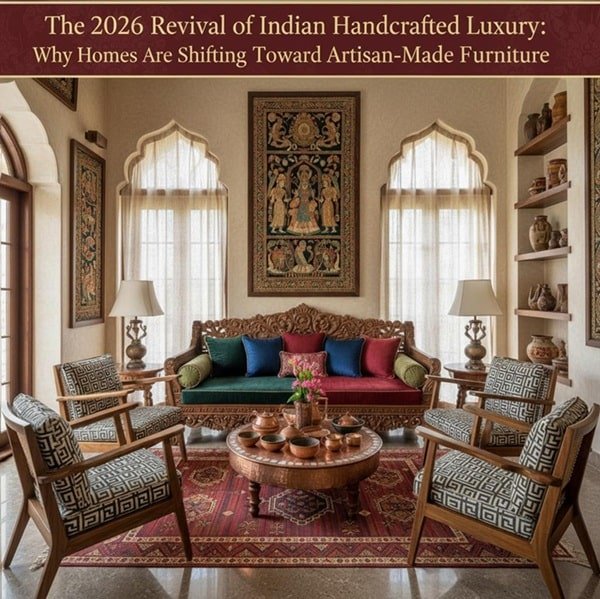
This change is coming from a deeper place. Homeowners are valuing quality over quantity. They want pieces that last, pieces that feel personal, and pieces that connect them to culture and memory. Indian craftsmanship fits naturally into this mindset.
Handmade furniture carries warmth that machines cannot create. As modern homes search for character, Indian craft is finding its place again, not as décor but as part of everyday living.
What Makes Indian Handcrafted Furniture a Luxury Today
Luxury today is not about shine or heavy design. It is about effort, skill, and story. A handcrafted piece is unique by nature. No two carvings are exactly the same. Small marks, slight variations, and hand finished details make each piece different.
Indian handcrafted furniture is known for its detailing. Hand carving, inlay work, cane weaving, metal accents, and hand polished finishes require time and patience. These processes cannot be rushed.
Materials also matter. Solid woods like Sheesham, Mango, and Teak age beautifully. They become stronger over time and develop character. Unlike factory made boards, they can last for generations if cared for properly.
Because of this, handcrafted furniture becomes a long term part of the home. It is not replaced every few years. It carries memories and emotional value, making it more than just a functional item.
Cultural Identity and Emotional Value of Craft
Every handcrafted piece carries the identity of where it comes from. Carved furniture from Rajasthan reflects royal influence and is often seen in traditional temple for home designs with intricate detailing. Woodwork from Kerala shows simplicity and balance, making it ideal for minimalist home temples. Kashmiri walnut pieces carry fine detail and patience, adding a sense of calm and devotion to a temple for home setup. Inlay art from Gujarat showcases precision and heritage, often enhancing decorative elements of handcrafted home temples.
When someone brings such a piece into their home, they are not just buying furniture. They are bringing a story with it. The fact that human hands shaped the wood creates a connection that machine made furniture cannot offer.
Homeowners today want spaces that feel personal. They want their homes to say something about who they are. Craft allows this expression without being loud.
Handcrafted furniture fits easily into modern homes. It works as functional art. A carved cabinet can exist in a minimal room. A cane chair can sit beside a modern sofa. Craft does not have to look traditional to feel rooted.
Moving Away From Mass Produced Furniture
Many consumers have grown tired of furniture that looks good in photos but wears out quickly. Particle board, factory finishes, and lightweight construction do not hold up to everyday use.
In 2026, people are thinking more carefully before buying. They want furniture that lasts longer and does not need frequent replacement. Sustainability has become part of the decision making process.
There is also a growing interest in supporting local artisans and craft communities. Younger buyers especially want to know where their furniture comes from and who made it.
Social media has played a role in this shift. Handcrafted pieces shared online stand out because they feel honest and grounded. They show texture, depth, and imperfections that feel refreshing in a digital world.
How Artisan Made Furniture Changes Modern Interiors
Handcrafted furniture adds warmth to modern spaces. Clean layouts often need something grounded to balance them. Craft provides that balance naturally.
Styles like Japandi, modern rustic, and minimal luxe work well with Indian handcrafted elements. A carved king size bed design adds depth and character to a simple bedroom without overpowering the space. A cane cabinet softens a sharp living area, while brass-detailed sideboards bring quiet richness and balance to contemporary interiors.
Artisanal decor also plays a role. Handwoven dhurries, pottery, metal lamps, wooden panels, and woven baskets add layers without crowding the space.
These pieces often become focal points. Guests notice them. Conversations start around them. Craft brings life into the home without demanding attention.
The Future of Handcrafted Luxury Beyond 2026
The future of handcrafted furniture looks strong. There is growing collaboration between artisans and designers. Traditional techniques are being adapted to modern needs.
Custom made furniture is becoming more popular. People want pieces designed for their homes, not adjusted from standard sizes.
Indian craftsmanship is also gaining global recognition. Made in India is becoming a mark of quality and authenticity in design.
Brands are playing an important role by connecting artisans with wider markets and helping revive forgotten crafts. This makes handcrafted luxury more accessible without losing its value.
For homeowners, choosing handcrafted furniture means being patient. It means mixing craft with modern layouts thoughtfully and caring for the pieces over time.
Final Thoughts
The revival of Indian handcrafted luxury in 2026 is not a passing phase. It is a return to values that were never truly lost. Homes are shifting toward furniture that feels honest, durable, and meaningful. Craft brings history, emotion, and human effort into modern spaces.This movement is about slowing down, choosing better, and living with pieces that tell a story. In a fast moving world, handcrafted furniture brings calm and connection back into the home.